
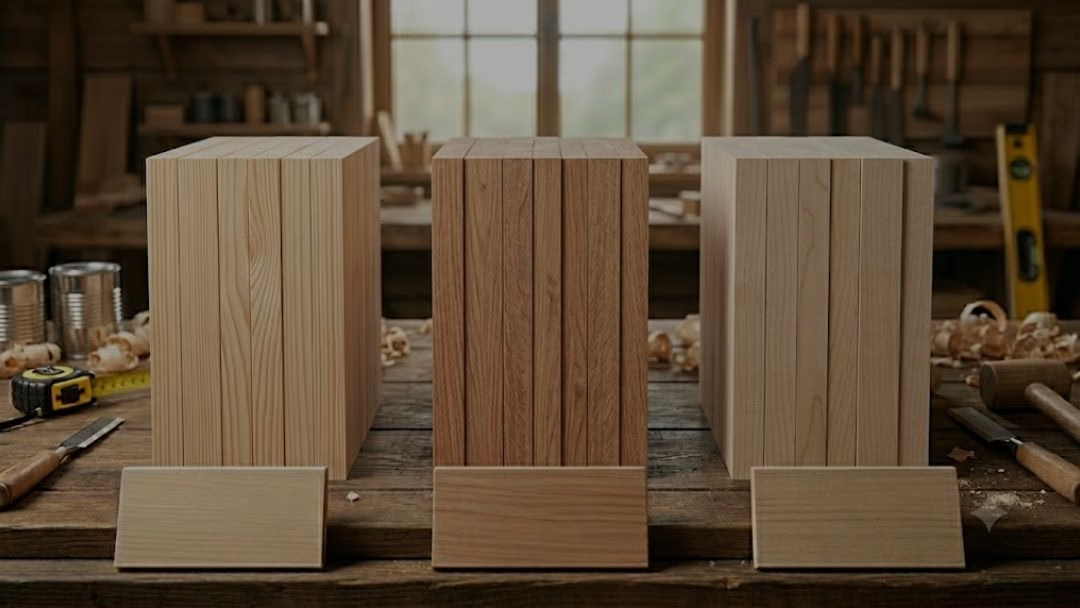
Hinoki, Cedar, or Spruce? How to Choose the Right Sauna Wood for Your Home
Hinoki, Cedar, or Spruce ? : If you have spent any time researching home saunas, you have almost certainly come across three names: Hinoki, Cedar, and Spruce. They appear on nearly every product page and buying guide. They are praised, compared, and debated often without the context that actually matters to a real buyer.
Here is the truth: all three are excellent sauna woods. But they are excellent in different ways, for different people, in different contexts. The right choice depends on what you are looking for from your sauna experience and understanding those differences is what this guide is about.
Why Wood Choice Matters More Than You Think
Before the comparison, a quick note on why this decision deserves real thought.
The wood in your sauna is not just an aesthetic choice. It determines how the heat feels on your skin, what the air smells like at 80°C, how the chamber performs over five, ten, or twenty years, and what kind of maintenance your investment will require. The wrong wood in a humid tropical climate like Indonesia or Bali can deteriorate far faster than expected. The right wood becomes something that deepens with age.
This is not a decision to make based on price alone.
Hinoki: Japan's Most Revered Timber
Hinoki (Chamaecyparis obtusa) is a Japanese cypress that has been used for over a thousand years in the construction of temples, shrines, imperial palaces, and the traditional Japanese ofuro bathing ritual. That is not marketing , it is documented history. The original Ise Grand Shrine in Japan has been rebuilt every twenty years for more than thirteen centuries, and it has always been rebuilt from Hinoki.
For the sauna world, Hinoki brings three qualities that no other wood fully replicates.
The aroma. Hinoki releases a soft, citrus-cedar scent driven by a natural compound called hinokitiol. At sauna temperatures, this aroma becomes noticeably stronger not sharp or overwhelming, but genuinely calming. Research has shown that hinokitiol has measurable effects on cortisol reduction and nervous system response. When you step into a Hinoki sauna, the scent is part of the therapy.
The thermal comfort. Hinoki is a remarkably poor conductor of heat, which means the wood surface stays cool to the touch even when the interior reaches 85–90°C. Sitting or resting against Hinoki benches at high temperatures produces none of the discomfort that more conductive woods can cause. This is particularly important for longer sessions.
The longevity in humidity. Hinoki's natural oils make it highly resistant to mold, rot, and moisture damage. In humid climates including the tropical conditions common across Indonesia this resistance is not a bonus, it is essential. A well-maintained Hinoki sauna ages beautifully, often developing a richer, warmer tone over the years rather than degrading.
The trade-off is straightforward: Hinoki is the most premium option in terms of cost and sourcing. It is worth it for buyers who view their sauna as a long-term investment in quality and sensory experience.
Cedar: The Western World's Gold Standard
Western Red Cedar (Thuja plicata) is the wood most North American and European sauna manufacturers default to and with good reason. It is beautiful, durable, and widely available. For decades, it has set the benchmark for what a quality sauna should feel and look like.
Cedar's signature quality is its warmth both visual and olfactory. The rich reddish-brown grain is immediately striking, and the earthy, resinous aroma is what most people picture when they imagine a sauna. That scent is distinctive and strong, especially when the wood is new.
On durability, Cedar performs very well. Its natural oils resist moisture, mold, and insect damage effectively, making it a solid choice for long-term use. It stays relatively cool to the touch under heat, though not quite at the level of Hinoki's thermal comfort.
There are two honest considerations for Cedar buyers. First, the aroma. Where Hinoki's scent is subtle and builds gently with heat, Cedar can be intense particularly in enclosed spaces and in the early months of use. Most people love it. Some find it too much over time. Second, Cedar's natural fragrance does diminish with age and repeated heat exposure, which means the sensory experience evolves as the wood matures.
Cedar is an excellent choice for buyers who want a proven, premium material with strong visual character and reliable performance. At Nagomi, we consider Cedar a worthy companion to Hinoki in any serious sauna build.
Spruce: The Nordic Minimalist
Spruce is the sauna wood of Scandinavia the material of choice in Finnish public saunas, lakeside cabins, and community bathhouses across the Nordic region. It has earned its place in sauna culture not through luxury, but through honest practicality.
The defining feature of Spruce is its neutrality. It has almost no natural scent, which makes it the preferred choice for sauna purists who want the heat experience completely unmediated by aroma. If you use essential oils, löyly fragrance solutions, or aromatherapy blends during your sessions, Spruce provides a clean canvas that lets those additions express themselves fully.
Spruce is lightweight, easy to work with, and considerably more affordable than Hinoki or Cedar. In dry, well-ventilated sauna environments particularly in cooler climates ,it performs well and ages gracefully. The pale, clean grain has a quiet, minimalist beauty.
The honest limitation of Spruce is its moisture sensitivity. In humid tropical climates, Spruce requires more consistent maintenance and ventilation than Hinoki or Cedar to achieve comparable longevity. Without proper care, it can develop discoloration and surface degradation over time. This is not a disqualifier, but it is a meaningful consideration for buyers in Southeast Asia.
Side-by-Side: The Key Differences
| Feature | Hinoki | Cedar | Spruce |
|---|---|---|---|
| Aroma | Soft citrus-cedar, therapeutic | Strong, earthy, distinctive | Neutral, near scentless |
| Thermal comfort | Excellent — stays very cool | Good | Good |
| Moisture resistance | Exceptional | Very good | Moderate |
| Grain & appearance | Pale cream, ultra-fine grain | Reddish-brown, warm grain | Light, clean Nordic grain |
| Tropical climate suitability | Best | Very good | Requires more maintenance |
| Price point | Premium | Mid-premium | Most accessible |
| Best for | Long-term investment, sensory depth | Visual character, proven performance | Aromatherapy users, cool climates |
Which Wood Is Right for You?
Here is a simple way to think about it.
Choose Hinoki if you want the most complete sensory experience aroma, thermal comfort, and longevity all working together and you are building a sauna to last decades. It is the obvious choice for humid tropical environments and for buyers who approach the sauna as a daily ritual rather than an occasional luxury.
Choose Cedar if you love the warmth of a rich, aromatic sauna, want a wood with strong visual presence, and are buying from a tradition of quality that has been validated globally. Cedar is particularly well suited to indoor saunas where the aroma can be fully appreciated.
Choose Spruce if you prefer a neutral aromatic environment, enjoy customizing your sauna sessions with oils and fragrances, and are working with a more flexible budget. In a well-maintained setup with proper ventilation, Spruce delivers honest, reliable performance.
At Nagomi, our Barrel and Cube saunas are built primarily from Japanese Hinoki and Sugi not as a default, but as a deliberate choice rooted in three decades of working with these materials at our SCP manufacturing facility in Indonesia. We have seen how these woods behave over time in tropical conditions. We choose them because they are the best answer to the question you are asking.
The Material Is the Experience
There is a reason the world's most revered wellness spaces from Kyoto's ancient bathhouses to Tokyo's contemporary sento culture choose Hinoki above all other materials. It is not nostalgia. It is the accumulated understanding that the material shapes the ritual, and the ritual shapes the person.
Whatever wood you choose, choose it intentionally. A sauna built from the right material is not just a piece of garden furniture or a room addition. It is a practice you return to day after day, season after season for the rest of your life.