
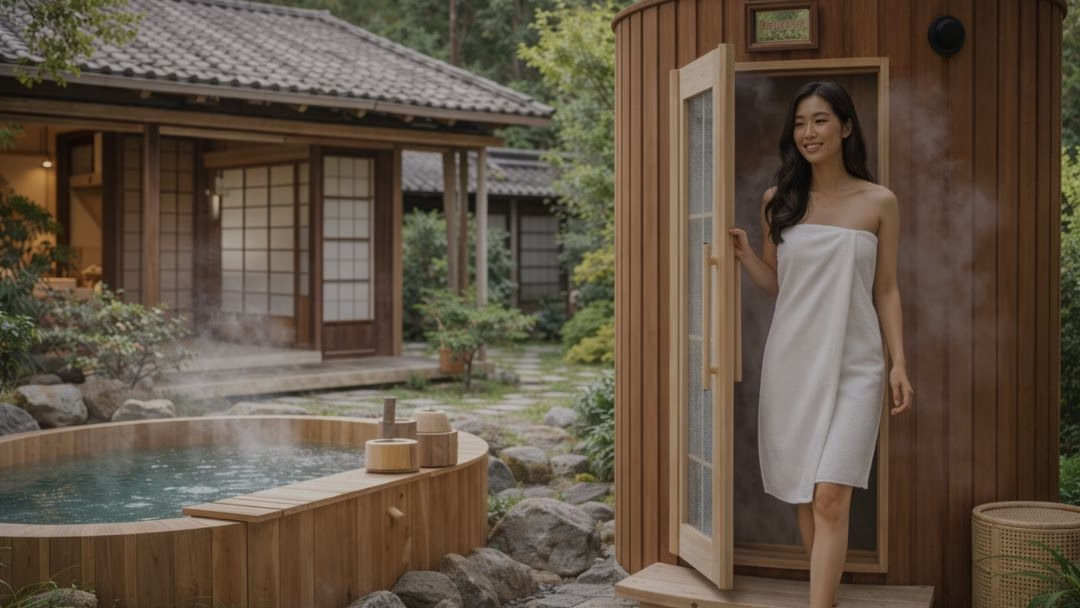
The Hidden Healing Power of Hinoki Wood
The Hidden Healing Power of Hinoki Wood : A Scientific Perspective on Natural Materials and Human Well-Being
Introduction
In recent years, there has been a growing global awareness of the relationship between built environments and human well-being. As modern lifestyles become increasingly fast-paced and digitally driven, individuals are spending more time in enclosed, artificial spaces. This shift has contributed to rising levels of stress, fatigue, and mental overload.
In response, both researchers and designers have begun exploring the role of natural materials in improving physical and psychological health. Among these materials, Hinoki wood a Japanese cypress traditionally used in architecture and bathing culture has gained particular attention.
This article examines the healing properties of Hinoki wood, combining traditional knowledge with scientific findings, while highlighting its relevance in modern living environments.
Characteristics of Hinoki Wood
Hinoki (Chamaecyparis obtusa) is a slow-growing cypress native to Japan. It has been historically used in the construction of temples, shrines, and traditional bathhouses due to its durability, fine grain, and natural resistance to moisture.
However, beyond its structural qualities, Hinoki is distinguished by its aromatic compounds, which are released naturally into the surrounding environment.
These compounds are responsible for:
- It's distinctive fresh, woody, slightly citrus-like scent
- It's natural antibacterial properties
- It's interaction with human physiological responses
Phytoncides and Their Biological Effects
One of the most significant aspects of Hinoki wood is its emission of phytoncides—volatile organic compounds produced by trees as part of their natural defense system.
Key Findings :
- A study published in Environmental Health and Preventive Medicine found that exposure to phytoncides can significantly reduce cortisol levels, a primary stress hormone.
- Research by Nippon Medical School demonstrated that individuals exposed to forest environments rich in phytoncides experienced:
- Lower blood pressure
- Reduced heart rate
- Improved parasympathetic nervous system activity
- Additional findings suggest that phytoncides may enhance immune function by increasing natural killer (NK) cell activity (Li, Q., 2010).
These results support the concept that natural wood environments can actively contribute to stress reduction and physiological recovery.
Connection to Shinrin-yoku (Forest Bathing)
The benefits of Hinoki wood are closely aligned with the Japanese practice of Shinrin-yoku, which involves immersing oneself in a forest environment to promote health and well-being.
Scientific Evidence :
- Studies conducted by Chiba University have shown that spending time in forest environments:
- Reduces anxiety and depression indicators
- Enhances mood and cognitive function
- Improves overall emotional balance
Hinoki wood effectively brings elements of this forest environment into indoor spaces, allowing individuals to experience similar benefits without leaving their homes.
Antibacterial and Hygienic Properties
In addition to its psychological effects, Hinoki wood also offers practical health benefits.
Research Insights :
- Hinoki contains natural compounds such as hinokitiol, which exhibit strong antibacterial and antifungal properties.
- A study published in the Journal of Wood Science confirmed that Hinoki wood inhibits the growth of common bacteria and mold, making it particularly suitable for high-moisture environments such as bathrooms and saunas.
This natural resistance reduces the need for chemical treatments, supporting a cleaner and more sustainable living environment.
Impact on Indoor Environmental Quality
Indoor environmental quality (IEQ) has become a critical factor in modern architecture and wellness design.
According to the World Health Organization, poor indoor environments contribute significantly to stress and long-term health issues.
Natural materials like Hinoki can improve IEQ through :
- Air purification via natural compound release
- Reduction of synthetic chemical exposure
- Creation of calming sensory environments
This positions Hinoki as not only a design element, but as a functional contributor to healthier living spaces.
Application in Modern Living
The integration of Hinoki wood into residential environments particularly in features such as bathtubs, saunas, and interior elements—represents a convergence of tradition and modern wellness design.
Observed Benefits in Daily Use :
- Enhanced relaxation during bathing rituals
- Reduced mental fatigue after prolonged work periods
- Improved sensory comfort through tactile and olfactory stimulation
These benefits align with the growing demand for home-based wellness solutions, where individuals seek to recreate restorative experiences within their personal spaces.
Product Value Perspective
From a product standpoint, Hinoki-based solutions offer a unique combination of :
- Functional Value
- Natural antibacterial properties
- Durability in humid environments
- Low maintenance compared to synthetic alternatives
- Emotional Value
- Creation of calming, spa-like experiences
- Enhancement of daily rituals
- Support for mental well-being
- Experiential Value
- Multi-sensory engagement (touch, scent, visual warmth)
- Connection to nature within indoor environments
- Alignment with slow living and mindful lifestyles
This multi-layered value proposition distinguishes Hinoki products from conventional materials.
Conclusion
The growing interest in Hinoki wood reflects a broader shift in how individuals define comfort, luxury, and well-being. Scientific research increasingly supports what traditional Japanese practices have long understood: that natural environments play a crucial role in human health.
Hinoki wood, through its emission of phytoncides, antibacterial properties, and sensory qualities, offers a practical and effective way to integrate these benefits into modern living spaces.
In an era characterized by speed and overstimulation, the value of such materials lies not only in their functionality, but in their ability to restore balance quietly, naturally, and consistently.
References (Simplified)
- Li, Q. (2010). Effect of forest bathing trips on human immune function. Environmental Health and Preventive Medicine.
- Park, B.J. et al. (2010). The physiological effects of Shinrin-yoku.
- Journal of Wood Science – Studies on Hinoki antimicrobial properties
- World Health Organization – Indoor Environmental Quality reports