
Beyond Function: Hinoki Bathtubs as Interior Art
At Nagomi, we often say that Hinoki is not merely a material; it is a feeling. To understand why a Hinoki bathtub can be considered interior art, one must first step away from the modern obsession with speed and efficiency, and enter a more mindful way of living one that values ritual, craftsmanship, and quiet luxury.
A Story Rooted in the Forest
Hinoki, a Japanese cypress revered for centuries, grows slowly in the misty mountains of Japan. The trees stand tall and dignified, absorbing years of rain, wind, and sunlight. This slow growth is not a flaw—it is the source of Hinoki’s strength, fine grain, and gentle aroma. When craftsmen work with Hinoki, they are not shaping ordinary wood; they are collaborating with time itself.
Imagine a tree that has witnessed generations pass, now reborn as a bathtub in a contemporary home. Its journey from forest to bathroom is not about extraction, but transformation. Each plank is carefully selected, cut, and assembled using traditional techniques that honor the integrity of the wood. No excess. No shortcuts. Just patience and respect.
This is why a Hinoki bathtub carries a presence. It does not shout for attention, yet it quietly commands the space around it.
Beyond Utility: The Bathtub as a Centerpiece
In many homes, the bathtub is hidden—tucked away behind curtains or glass panels, chosen for practicality rather than beauty. A Hinoki bathtub challenges this notion entirely. It invites you to place it at the center, both physically and emotionally.
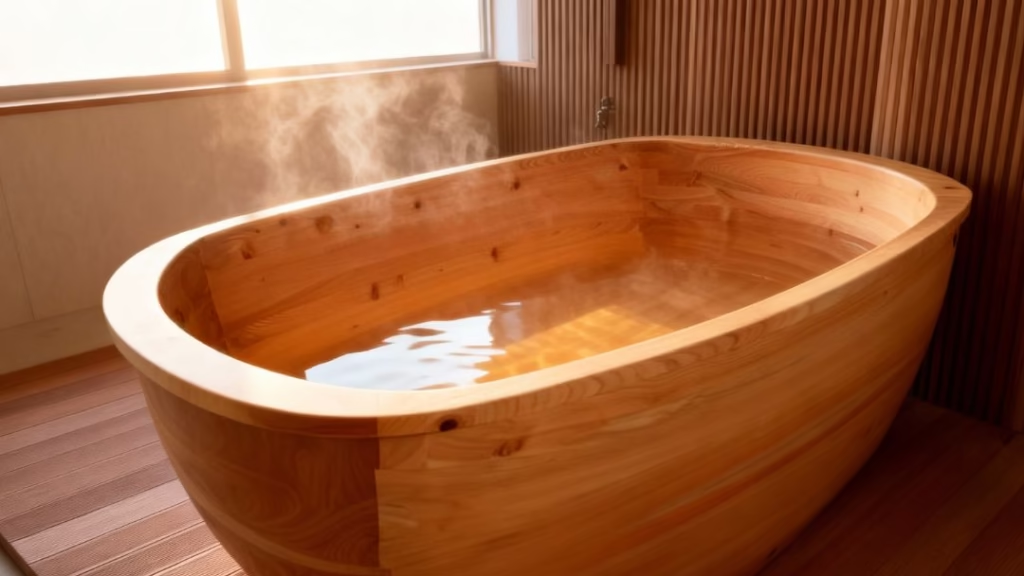
Visually, Hinoki offers a soft, natural palette. Its warm honey tones and subtle grain patterns create a calming contrast to stone, concrete, or ceramic surfaces. Over time, the wood matures, developing a richer character that tells the story of daily use. Scratches become memories. Color changes become proof of life.
But the artistry of a Hinoki bathtub goes deeper than appearance. When filled with warm water, the wood releases a delicate, calming aroma—fresh, slightly citrusy, unmistakably natural. This scent is not added or manufactured; it is inherent. It transforms the act of bathing into a multisensory experience, blurring the line between function and art.
A Living Sculpture
Art, at its core, evokes emotion. It makes us feel something beyond logic. A Hinoki bathtub does exactly that.
Unlike cold porcelain or industrial acrylic, Hinoki responds to the human body. It retains warmth, offering a gentle embrace rather than a shock of cold. The texture is smooth but alive, reminding you that you are in contact with something once rooted in the earth.
In this sense, a Hinoki bathtub is a living sculpture. It changes with humidity, temperature, and touch. It reacts to light differently throughout the day—soft in the morning, golden in the afternoon, intimate at night. Each bath becomes slightly different from the last, just as no two moments in life are the same.
The Ritual of Bathing, Reimagined
In Japanese culture, bathing has never been just about getting clean. It is a ritual of purification and renewal—a moment to wash away not only physical fatigue, but emotional weight.
A Hinoki bathtub naturally invites this mindset. You do not rush into it. You prepare the water. You pause. You breathe in the aroma. The bathtub becomes a stage for a daily ceremony, one that reconnects you with yourself.
This ritual quality is what elevates the Hinoki bathtub into the realm of interior art. It shapes behavior, not just space. It encourages slower living, intentional design, and a deeper appreciation for everyday moments.
Harmony in Interior Design
At Nagomi, the word “nagomi” itself means harmony—between people, nature, and space. A Hinoki bathtub embodies this philosophy perfectly.
In minimalist interiors, it adds warmth and soul. In modern luxury spaces, it introduces authenticity. In traditional-inspired homes, it feels timeless rather than nostalgic. The bathtub does not compete with its surroundings; it completes them.
Designers often speak of “statement pieces.” A Hinoki bathtub is not a statement of excess, but of intention. It tells visitors that this home values craftsmanship over trends, experience over appearance, and longevity over convenience.
Aging Gracefully: Beauty That Deepens Over Time
One of the most poetic qualities of Hinoki is how it ages. Unlike materials that deteriorate and must be replaced, Hinoki evolves.
With proper care, a Hinoki bathtub can last for decades. Its surface may darken slightly, its grain may become more pronounced, but these changes are not imperfections. They are evidence of shared time—of mornings begun slowly, of evenings ended in silence.
In a world obsessed with the new, there is something profoundly comforting about an object that grows more beautiful as it ages.
More Than a Bathtub
To call a Hinoki bathtub merely a bathroom fixture is to miss the point entirely. It is furniture. It is sculpture. It is atmosphere.
It anchors a space emotionally, not just structurally. It reminds us that design is not about filling rooms with objects, but about creating environments that support the way we want to live.
When you step into a Hinoki bathtub, you are stepping into a story—one that began in a quiet forest and continues, day by day, in your own home.
The Nagomi Perspective
At Nagomi, we curate Hinoki bathtubs not as products, but as experiences. Each piece reflects a commitment to authenticity, sustainability, and timeless design. We believe that true luxury is found in materials that speak softly, yet leave a lasting impression.
Beyond function, beyond trend, beyond time—Hinoki bathtubs stand as interior art, inviting you to slow down, breathe deeply, and rediscover the beauty of simple rituals.
And perhaps that is the greatest art of all.