What Developers Should Consider When Adding Wellness Facilities
For developers seeking to create meaningful and lasting wellness environments, here are the key considerations.
Align Wellness with Brand Positioning
Before determining the type of facilities to build, developers must clarify their brand positioning. Is the property positioned as a luxury eco-retreat, an urban boutique hotel, or a premium residential complex? Wellness facilities should strengthen this identity.
For example, properties emphasizing tranquility, nature, and authenticity benefit from natural materials and minimalist design approaches. This is where Nagomi’s Hinoki-based wellness products provide strong brand alignment. Inspired by traditional Japanese bathing culture, Nagomi integrates authentic craftsmanship with contemporary luxury, making it ideal for high-end resorts, boutique hotels, and wellness-focused residences.
Wellness is not just an amenity, it is a narrative extension of your brand.
Choose Materials That Elevate Experience and Longevity
Material selection is one of the most critical factors in wellness development. Facilities such as saunas, bathtubs, and spa areas are exposed to heat, humidity, and frequent usage. Durability must go hand-in-hand with sensory experience.
Hinoki wood, widely used in traditional Japanese baths and temples, is known for its:
- Natural antibacterial properties
- Resistance to moisture and decay
- Calming, subtle aroma
- Smooth texture and timeless appearance
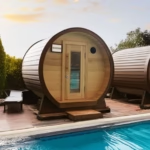
Nagomi’s Hinoki saunas, bathtubs, and wellness interiors are designed specifically for commercial durability while preserving aesthetic elegance. Compared to synthetic materials, natural Hinoki enhances the emotional and sensory value of the space, which directly impacts guest satisfaction and perceived luxury.
For developers, this means fewer maintenance issues and higher experiential quality over time.
Prioritize Spatial Flow and User Journey
A successful wellness facility is not just a collection of rooms—it is a curated journey. Developers should map out how users transition between spaces:
- Arrival and relaxation area
- Sauna or steam room
- Cold plunge or shower
- Soaking bath
- Resting lounge
The spatial sequence should promote relaxation and mindfulness. Nagomi’s modular Hinoki sauna systems and handcrafted bathtubs allow developers flexibility in layout while maintaining design cohesion. Whether in compact urban hotels or expansive resort spas, these products can be integrated seamlessly into different floor plans.
Wellness spaces must feel intuitive, calm, and immersive.
Consider Acoustic and Sensory Design
True wellness design addresses all senses—sight, touch, scent, and sound. Hard surfaces and artificial finishes often create echo and discomfort, while natural wood absorbs sound and softens the environment.
Hinoki’s subtle fragrance contributes to stress reduction and creates an authentic spa ambiance without artificial diffusers. By incorporating Nagomi’s wooden interiors, lampshades, and spa furnishings, developers can create cohesive sensory environments that elevate guest perception and differentiate the property from competitors.
In hospitality and premium residential markets, these details directly influence reviews and repeat bookings.
Plan for Operational Efficiency
Developers must think beyond aesthetics and consider operational realities:
- Ease of maintenance
- Energy efficiency
- Cleaning protocols
- Longevity of materials
Nagomi’s commercial-grade Hinoki products are engineered for professional environments, balancing craftsmanship with practicality. Proper ventilation, drainage planning, and material selection ensure that wellness facilities remain profitable rather than becoming cost burdens.
Investing in quality materials upfront significantly reduces long-term operational risks.
Understand the ROI of Wellness
Wellness amenities increase occupancy rates, average daily rates (ADR), and overall property valuation. In residential developments, spa-grade facilities enhance marketing appeal and differentiate projects in competitive markets.
Luxury buyers and travelers increasingly seek properties that support physical and mental well-being. A Hinoki sauna or Japanese soaking bath is not just an added feature, it becomes a signature selling point.
Developers who partner with Nagomi gain access to authentic, design-forward wellness solutions that resonate with global wellness trends while maintaining timeless Japanese elegance.
Final Thoughts
Adding wellness facilities is not simply about following trends. It is about creating spaces that improve quality of life, strengthen brand identity, and deliver measurable financial returns.
By focusing on:
- Strategic brand alignment
- High-quality natural materials
- Thoughtful spatial design
- Sensory integration
- Operational efficiency
Developers can transform properties into destinations of restoration and refinement.
Nagomi’s Hinoki-based wellness products offer a sophisticated pathway to achieving this vision—merging tradition, craftsmanship, and modern luxury into spaces that truly embody the meaning of wellness.