
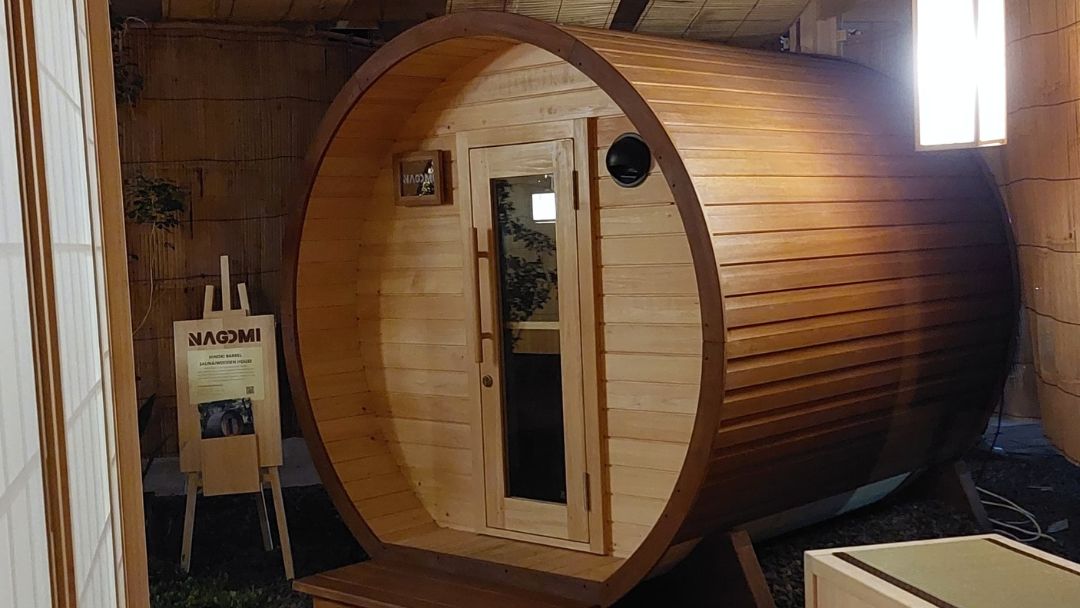
Barrel Sauna in the Tropics: Placement, Ventilation and Outdoor Care in Indonesia
A sauna in Indonesia may sound counterintuitive. Outdoor temperatures already sit around 30 degrees Celsius, humidity is high, and the rainy season brings heavy downpours. Yet saunas are growing in popularity across Bali, Java and Lombok, especially at villas and retreats where guests want a wellness experience beyond the pool. The barrel sauna is a favorite for these settings. This article covers why the barrel shape works, how to choose a spot, and how to keep the sauna in good condition in a tropical climate.
Why the Barrel Shape Works
A barrel sauna has curved walls and no sharp corners inside. Warm air rises along the curve and flows back down the opposite side, which helps spread heat evenly through the room. The interior is also compact, so the heater does not have to warm a large rectangular volume.
The shape has a practical benefit outdoors too. Rain runs off the curved roof instead of pooling, and the form sits comfortably in a garden, beside a pool, or at the edge of a rice field. For many guests, the barrel is also the most photogenic sauna format.
Is a Sauna Comfortable in a Hot Climate?
Yes, and many guests in tropical destinations enjoy it for exactly that reason. A sauna is heated well above the outside temperature, usually to 70 to 85 degrees Celsius, and sessions are short. Afterward, a cool shower or a cold plunge brings the body back down quickly. Early morning and evening sessions feel especially pleasant, and a sauna after an afternoon rain shower is hard to beat. In cooler highland areas, the contrast is even stronger.
Choosing the Right Location
Where you place the barrel affects comfort, safety and how long the wood lasts. Check these points before you commit to a spot:
- Shade and cover. A spot under a pergola or roof overhang protects the wood from direct sun and constant rain.
- Level, well-drained ground. Build a solid base such as a concrete slab or compacted platform, and make sure water drains away from it.
- Power supply. An electric heater needs a suitable circuit installed by a licensed electrician.
- Privacy and view. Guests relax more easily when they are not overlooked and can see greenery or water.
- Distance to a shower or cold plunge. Keep the walking path short, covered and non-slip.
Ventilation and Heating
Good airflow keeps the air fresh and the wood dry. Follow the ventilation layout recommended by your supplier, which usually places an air intake low near the heater and an outlet on the opposite side. Make sure the door seals well while the sauna is running, and choose a heater sized for the interior volume. After every session, leave the door ajar so the inside can dry out before the next use.
Protecting the Wood Outdoors
Hinoki is valued in Japan for its natural resistance to moisture and decay, and its fragrance stays pleasant even in warm weather. Outdoors in Indonesia, a few habits still help:
- Keep the barrel off wet ground and allow air to move underneath it.
- Wipe away standing water and condensation after use.
- Check the base and joints for termites at regular intervals.
- Follow the manufacturer's guidance for exterior finishing, and avoid sealing the interior benches.
Our guide to Hinoki, Cedar, or Spruce explains why wood choice matters so much in humid conditions.
Choosing the Right Size
Size depends on how many guests use the sauna at once and how the property operates. A private villa may need a compact barrel for two people, while a retreat may want room for a small group. Read How to Choose the Right Sauna Size for Your Property, then confirm the available sizes with the Nagomi team.
Before You Order
Prepare four answers: where the sauna will stand, how delivery trucks can reach the site, where power will come from, and when you want guests to start using it. With those details, the Nagomi team can arrange a site assessment and advise on the best setup. Book a consultation to get started.